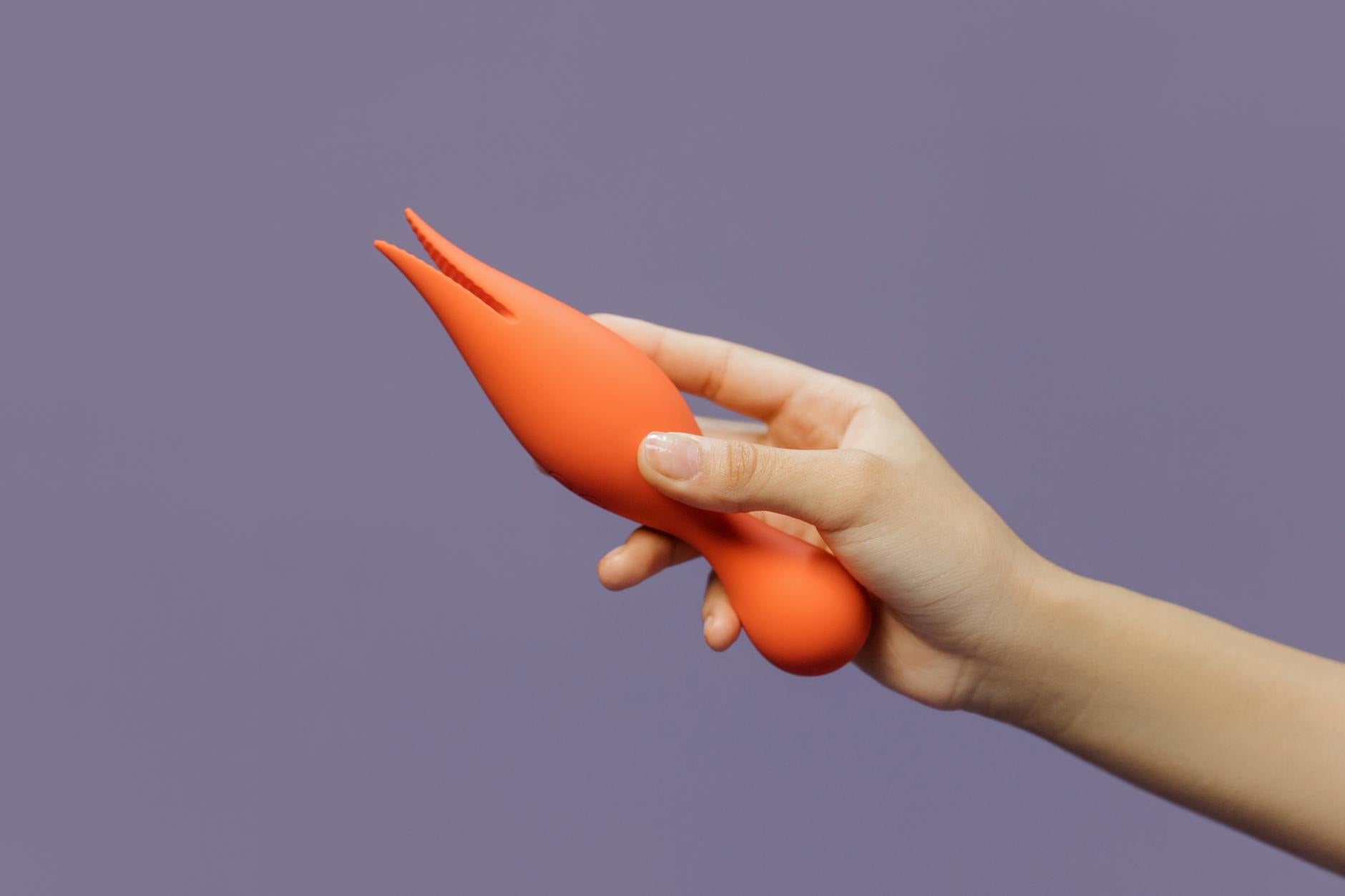
The sensitivity plot twist nobody talks about
Here's what feels counterintuitive: as you get older, your clitoris often becomes more sensitive, not less. You spent decades thinking "less responsive" was the menopause story. Instead, what's actually happening is more nuanced. Your nerve endings don't dull. They sometimes sharpen. And that changes everything about what feels good.
I see this shift in my clients constantly. A woman who happily used the same intensity level for 20 years suddenly hits her mid-40s and finds that direct, sustained stimulation feels too sharp. Uncomfortable, even. So she stops using toys altogether. She assumes her body is failing her. It's not. It's adapting.
Why heightened sensitivity happens
Three biological reasons combine to shift clitoral sensation:
Nerve density and hormonal shifts. Estrogen supports the structural integrity of tissue around nerves. As estrogen declines, that tissue thins slightly. Thinner tissue means the same nerve endings are closer to the surface. Closer to the surface means stimulation registers more intensely.
Reduced pelvic floor buffering. Your pelvic floor muscles have been supporting and cushioning your clitoral complex for decades. As estrogen drops, those muscles lose some tone and resilience. That loss means there's less shock absorption between external vibration and the nerve-rich tissue underneath.
Attention and awareness. This is the part nobody mentions because it sounds psychological. But it's not. As you age, you often have fewer distractions. Less hormonal cycling noise in your system. More actual awareness of sensation. That heightened awareness can make stimulation feel more pronounced, more noticeable. That's not a problem. It's data.
The lemon clitoral vibrator approach
There's a reason air-suction devices like the Lem work so well for bodies experiencing increased sensitivity. They don't rely on sustained direct friction. They use rhythmic suction pulses that stimulate the clitoris without the linear, constant pressure of a traditional vibrator.
Here's what that means practically:
- Lower starting intensity. If you've used patterns 4 or 5 in the past, start at pattern 1. The suction sensation registers differently than vibration, so what feels gentle can surprise you.
- Positioning matters more. With a traditional vibrator, you might press directly onto the clitoral head. With the Lem, angle it slightly to one side first. Let the suction cup create a seal, then adjust. You're not forcing contact. You're creating a gentle envelope of stimulation.
- Gradual intensity building. Spend 10-15 minutes on lower patterns. Your body will tell you when you're ready to move up. This isn't foreplay. This is the actual session.
The role of lubrication in the sensitivity equation
Water-based lube becomes even more important when sensitivity increases. Here's why: thin tissue is more prone to micro-tears when there's friction. Lubrication creates a protective layer. It also changes how suction feels, making it smoother and less stark.
Apply lube generously around the entire vulva, not just inside. The external tissue benefits most. Reapply during the session. This isn't weakness. This is intelligent self-care.
Pelvic floor tension and the sensitivity feedback loop
When sensation feels overwhelming, you often tense your pelvic floor automatically. Your body's protective reflex. But tension actually amplifies sensation further. It's a feedback loop that makes the whole experience feel too much.
Before using the Lem, spend two minutes on pelvic floor relaxation. Here's the real version: lie down, put your hand on your lower belly, and breathe into it slowly. Imagine your pelvic floor softening with each exhale. Not clenching and releasing. Not doing Kegels. Just relaxing. If you've never done this, it feels strange the first time. Stick with it.
When to dial it back vs. push through
There's a difference between "intense" and "uncomfortable." Intense can be pleasurable. Uncomfortable isn't.
Intense: a sharp, focused sensation that borders on too much but feels good. Uncomfortable: pain, burning, or the urge to stop immediately.
If you're hitting discomfort, stop. Lower the pattern. Reposition. Add more lube. This isn't failure. This is your nervous system giving you useful information.
If what you're experiencing is intense but pleasurable, and your body is responding with arousal and openness, you might actually be finding a new edge. Sometimes increased sensitivity opens up deeper sensation, not just uncomfortable sharpness.
Partner play and communication
If you're using the Lem with a partner, the sensitivity conversation is essential. Your partner might be used to the pressure and intensity you enjoyed before. Now you need less. That's not rejection of them or the toy. It's just different.
Talk about it plainly: "My body's more sensitive now. I need gentler, slower approaches." Then actually demo it together. Let them watch you explore the lower patterns. Show them what works. That collaborative exploration often deepens connection more than the old routine ever did.
Medication interactions and sensitivity
Some medications amplify clitoral sensitivity. Certain blood pressure medications, antihistamines, and even some antidepressants can shift sensation. If you've recently changed meds and noticed a sensitivity spike, check with your doctor. It's not something to ignore, and it's also not something to just accept without understanding.
Often a small dosage adjustment or timing change (taking meds at a different time of day) can help without disrupting the medication's benefits.
Long-term integration
Increased sensitivity isn't a phase. It's likely to stay. So the goal is integration, not waiting for it to pass.
This means building a new relationship with the Lem. Not using it the way you used to. Using it the way your body actually wants to be touched now. For some people, that means a slower, more meditative approach to pleasure. For others, it means discovering that gentler stimulation actually gets them to deeper, longer orgasms.
Your pleasure has evolved. Your tools can evolve with it.
FAQ: Heightened sensitivity and clitoral vibrators
Q: Does increased clitoral sensitivity mean something is wrong with me? A: No. It's a completely normal neurological and hormonal shift. Your body isn't malfunctioning. It's responding to hormonal changes and aging. Lots of people experience this, and it's highly manageable once you understand what's happening.
Q: Can I still use regular vibrators, or do I need to switch to the Lem? A: You don't have to switch. Some people with heightened sensitivity do great with lower-intensity patterns on their existing vibrator. But air-suction devices like the Lem offer a gentler sensation profile that many people find more comfortable. The best choice depends on your actual experience, not a rule.
Q: Will my sensitivity level out, or is this permanent? A: It typically stabilizes. It might spike during certain times of your cycle or during hormonal transitions, but it usually settles into a new normal within a few months of the initial shift. If it continues changing dramatically or causes pain, check with a healthcare provider.
Q: Is there a connection between increased sensitivity and difficulty with orgasm? A: Not necessarily. Some people with heightened sensitivity find orgasm easier because they need less stimulation to reach that point. Others find it harder because overwhelming sensation makes it difficult to relax enough to climax. It varies. Your experience will tell you which way you lean.
Q: Should I tell my partner about the sensitivity change? A: Yes. If your partner is involved in your pleasure, they deserve to know what's shifted and what you need now. It's not a criticism of them or a rejection of what used to work. It's just information that makes the experience better for both of you.
Q: Can lube reduce sensitivity, or will it mask what I'm actually feeling? A: Lube changes sensation, but it doesn't mask it. It actually clarifies it by reducing the stress on your tissue. You'll still feel everything. It just won't feel sharp or raw. Think of it as turning up the resolution of pleasure, not turning down the volume.
The bigger picture
Increased clitoral sensitivity is one small piece of how your body changes over time. You're not broken. You're not losing pleasure. You're shifting into a different kind of sensation and responsiveness. Some of what you discover in this new territory will surprise you. Some of it will feel better than anything you've experienced before.
The Lem and other lemon clitoral vibrators are designed with this reality in mind. They work because they meet your body where it actually is, not where you remember it being. That's the whole point. Your pleasure has earned the right to evolve. Everything about your approach can evolve with it.
If you're struggling with this shift, or if the sensitivity feels unmanageable, reach out to us. There's always more to explore, and you don't have to figure it out alone.