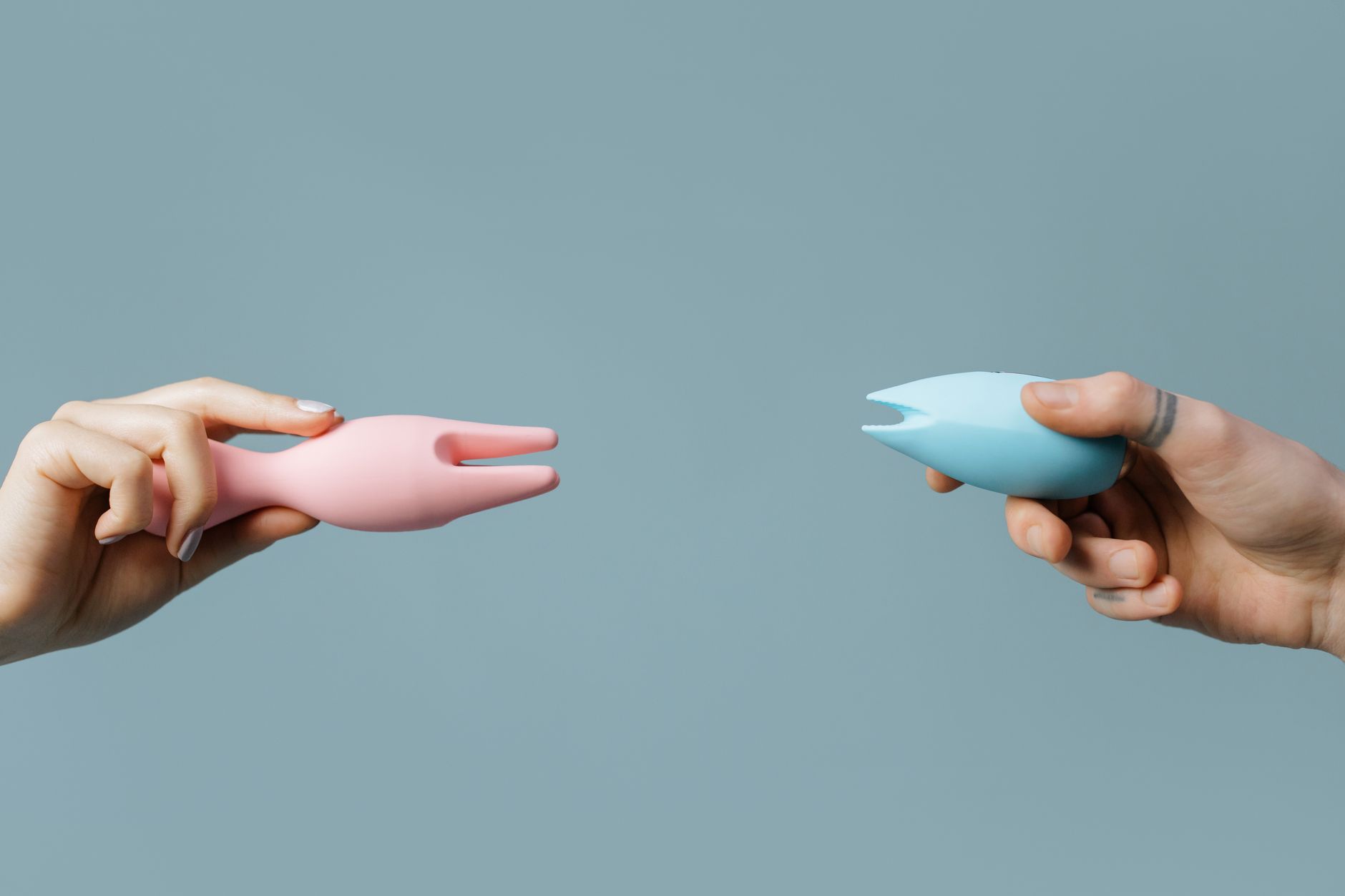
Let's start with the thing no one talks about
Depression flattens desire. Antidepressants sometimes flatten it more. Then recovery happens, your mood stabilizes, and suddenly you want to feel pleasure again. Except your body doesn't quite remember how. Or it remembers differently. And that gap between what you expect to feel and what you're actually sensing can feel like grief.
Here's what I want you to know first: that gap is normal, temporary, and absolutely bridgeable.
What actually happens to sensation during and after depression treatment
When you're depressed, your nervous system is in a state of depletion. Dopamine (the neurotransmitter tied to reward and pleasure) is low. Serotonin dysregulation means your body's baseline feels numb or heavy. Many antidepressants, especially SSRIs, take weeks to rebalance your brain. During that window, sex drive often drops further before it climbs back.
Here's what changes once you're stable:
Your nervous system starts to recognize safety again. Your body begins to re-sensitize. But it doesn't snap back like flipping a switch. Sensation returns in layers. Some people report that pleasure feels distant at first, like watching it through glass. Others say their clitoris feels less responsive, or orgasm takes longer to build. A smaller number experience heightened sensitivity that actually feels overwhelming.
All of this is the brain and body recalibrating. It's not permanent. It's not a sign you've broken something.
The emotional piece (which might be bigger than the physical one)
Depression often wraps itself around your identity. You start believing that numbness is you. So when sensation begins returning, the first thing that arrives isn't always excitement. It's sometimes shame, or confusion, or fear that if you feel good now, the depression might come back and steal it again.
That's a trauma response. Your body learned to protect itself by feeling less. It's trying to keep you safe.
Rebuild pleasure slowly. Use that as your mantra. Not because slow is inherently better, but because your nervous system needs proof that it's safe to open up again. A lemon clitoral vibrator is useful here precisely because it's gentle. The suction-based design doesn't require the kind of intense friction that might feel overwhelming if your body is still guarding itself. You can start at the lowest setting and let your body tell you when it's ready for more.
Starting small (what that actually means)
When I say start small, I don't mean timid. I mean intentional.
Set aside 20-30 minutes with no interruptions. Not rushed, not sneaky. Your nervous system needs to know that pleasure is scheduled and protected. That's safety.
Begin with touch that has nothing to do with orgasm. Hold a vibrator in your hand. Feel the weight. Turn it on the lowest setting against your forearm or inner wrist. Get curious about the vibration pattern. Does it feel tingly? Buzzy? Smooth? Your brain needs to remember that sensation isn't scary.
Move to your body when you're ready, not on a timeline. Some people are ready the same day. Others take a week. There's no right speed. If at any point you feel disconnected, numb, or anxious, stop. That's not failure. That's your body communicating.
How lemon vibrators fit into this specific situation
Lemon sexual toys, particularly the clitoral suction models like The Lem, work well during pleasure rediscovery because they operate differently than traditional vibrators. Instead of rapid vibration, they use gentle suction. That means:
You can start impossibly low. The lowest setting is barely-there, which lets your nervous system acclimate without shock.
Suction is less triggering for trauma-informed bodies than friction or vibration can be. If your nervous system is still in protect-mode, suction tends to feel gentler, less intrusive.
You have granular control. You can pulse a setting rather than holding it steady. You can move the toy around rather than staying in one spot, which helps your body remember that pleasure is dynamic, not fixed.
The sensations feel novel without being strange. Because suction works differently than vibration, your body isn't trying to remember how to respond to the exact same input it stopped responding to during depression. It's learning a new language.
Managing the unpredictability
One of the hardest parts of pleasure recovery is that it's inconsistent. Some days you feel everything. Some days the same toy on the same setting feels like nothing. You might have an amazing session, then the next week feel nothing at all.
This isn't regression. This is your nervous system still settling. Some days your body has more bandwidth for sensation. Some days it's protecting itself because you're stressed, tired, or having a harder mood day. Your job isn't to force consistency. It's to meet yourself where you are.
Keep a small note on your phone. Not to pathologize, but to notice: "Lower energy today, needed longer warm-up." "Felt everything, no warm-up needed." Over a few weeks, you'll see patterns. You'll understand what your body needs on different days.
If you have a partner, this conversation is separate from the toy conversation
Many people want to use lemon clitoral vibrators as a way to