Relationships
How to Use Lemon Vibrators When Partners Have Different Pleasure Timelines
One person gets there in five minutes. The other needs twenty. That gap doesn't mean incompatibility. It means you need the right tool.
Relationships
One person gets there in five minutes. The other needs twenty. That gap doesn't mean incompatibility. It means you need the right tool.
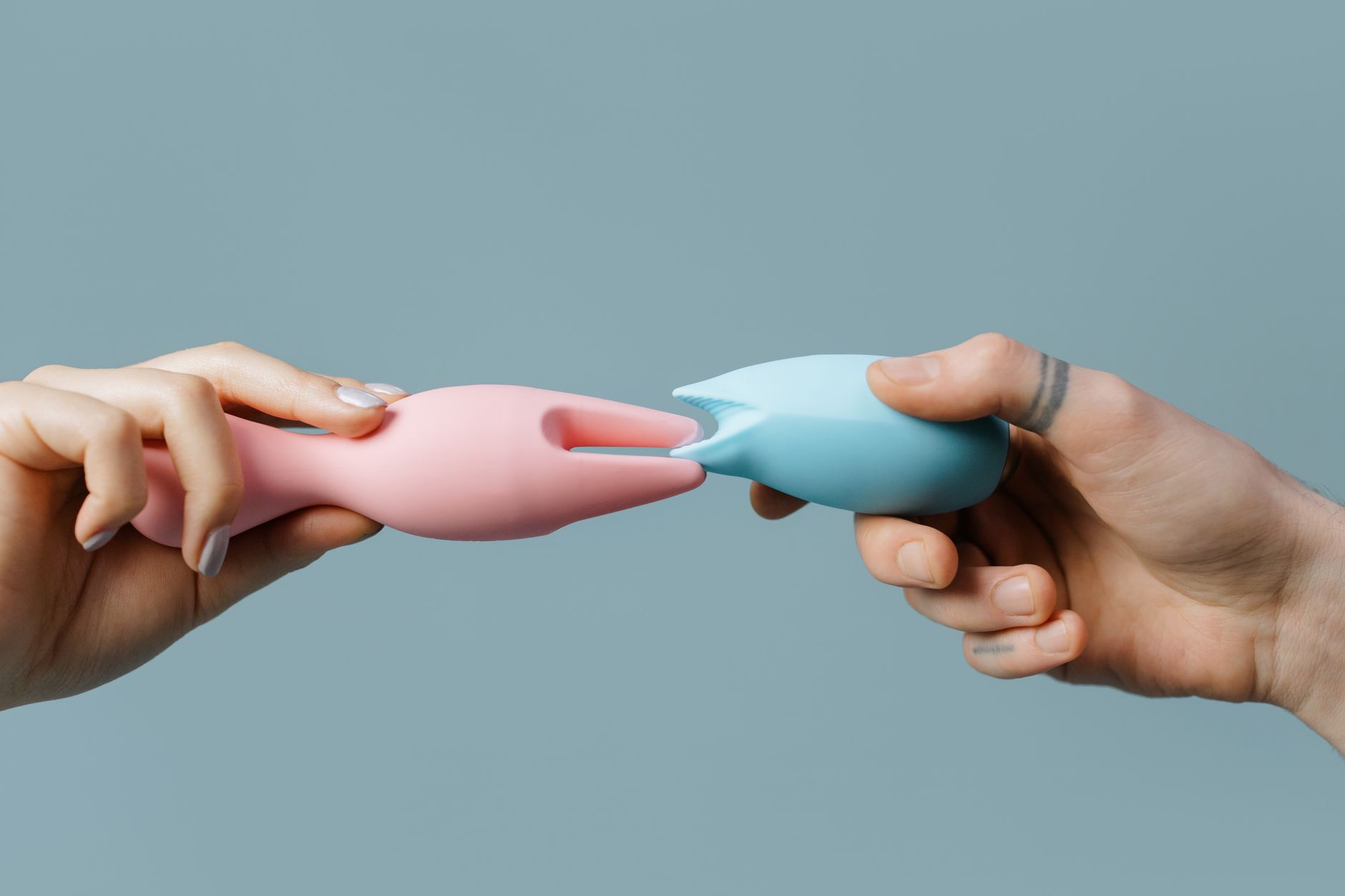
Here's what happens in most relationships: one partner orgasms easily and quickly. The other takes longer—sometimes much longer. Then there's guilt, pressure, and that awful moment where someone says "just come already" or pretends they finished to let their partner off the hook.
Neither of those scenarios is good sex. And honestly, they're both really common.
The timing mismatch is one of the sneakiest relationship friction points because it feels like a physical problem when it's actually a coordination problem. Your bodies aren't broken. You just need a different game plan.
Physiology plays a role, sure. People with vulvas generally take longer to climax than people with penises—that's a statistical fact. But it gets more specific than that. Some bodies respond instantly to external stimulation. Others need internal, mental, or combined touch. Stress, medications, age, and past experiences all shift the timeline too.
Here's the thing that catches most couples off guard: the person who "finishes quick" isn't necessarily having better sex. Fast climax sometimes means less sensation, less time to build, less deep pleasure. And the person who takes longer? They might be having incredibly intense, full-body experiences. But if their partner checked out three minutes ago, they're basically alone up there.
That's where the real resentment grows. Not from the time difference. From feeling unseen.
The first instinct a lot of couples have is to take turns. "You come first, then me." It feels fair. It's definitely organized. But here's the problem: after one person climaxes, their body chemistry shifts. Arousal drops. Sensitivity changes. You're essentially asking one partner to perform in a cold stadium while the other one leaves.
It doesn't work because sex isn't supposed to feel like assembly line work.
What actually works is pleasure happening at the same time, on different tracks. This is where lemon vibrators change the entire dynamic.
Lemon vibrators—especially models like the suction-based designs—work at their own speed independent of what a partner is doing. That means one person can get exactly the stimulation they need while their partner gets what they need, simultaneously.
Let's walk through the mechanics. If someone with a vulva needs longer to climax, a lemon vibrator gives them continuous, consistent stimulation they can control. They set the intensity. They set the rhythm. Meanwhile, their partner isn't sitting around waiting. They're engaged in penetrative sex, manual touch, or their own pleasure.
Both of you finish around the same time. No pressure. No performing. No awkward gaps.
The second advantage: lemon sexual toys remove the "I'm taking too long" shame spiral. When you're relying only on a partner's body, every second feels like you're broken. Introduce a lemon clitoral vibrator and suddenly the problem becomes a feature. You're using a tool. You're not failing.
Honestly though, using a lemon vibrator as a couple requires one thing that most people skip: talking about it first.
Don't just introduce the toy mid-sex and expect it to feel good. Bring it up outside the bedroom when you're clothed and not trying to be intimate. Say something like: "I've been thinking about our timing thing. I don't think either of us is broken. I just think we need a different setup. Would you be open to trying something together?"
Then talk specifically: Who would use the vibrator? When? What would the other person be doing? Some couples use it for the person who needs more time. Some use it on both partners simultaneously. Some use it for clitoral stimulation while penetration happens. There's no one way.
The key is consent and curiosity, not secrecy. A lemon vibrator brought into intimacy with an attitude of "let's figure this out together" feels collaborative. One introduced as a surprise or a fix-it tool can feel like criticism.
Once you've had the conversation, here's what actually works in practice.
Start with both of you clothed. Hold the lemon vibrator (or whatever lemon adult toy you've chosen). Let the person who'll use it explore what speed and pattern feels good when there's zero pressure. Maybe pattern one for a minute. Maybe pattern three. There's no rush.
Then add your partner's touch—hand, penetration, whatever you've agreed to. The vibrator keeps going at whatever pace is working. Your partner adjusts based on what they see: faster breathing, movement, body tension. You're reading each other in real time instead of trying to time something impossible.
Here's a practical detail: if you're using a lemon clitoral vibrator during penetrative sex, your partner might need to shift angle slightly so there's room. This is solvable. Side-by-side positions, angles where penetration happens lower, or the receiving partner on top all give clearance for a vibrator at the clitoris.
The rhythm doesn't have to match. One person might be doing slow, deep strokes while the other is using a higher-speed vibration pattern. Your bodies aren't supposed to be synchronized metronomes. They're supposed to be finishing around the same time.
Most couples who try this don't look back. The feedback I hear is: "We didn't realize how much tension was baked into the timing thing until it went away."
Because here's what changes. Instead of one partner performing and one partner worrying, you're both in it. Both responsible for your own pleasure. Both present for the other person's. The sex gets longer, more relaxed, and honestly more generous. When you're not anxious about timing, you have capacity to actually enjoy what's happening.
Some couples use the lemon vibrator every time. Some use it occasionally. Some cycle it in when life is stressful and everyone's a little tense. The point is: you have an option now. You're not stuck with the original problem.
One more thing: using a sex toy as a couple sometimes surfaces conversations about what else has been unsaid. "I've been faking it" or "I actually prefer this over penetration" or "I want us to try new things." Let those conversations happen. They're the good kind of friction.
If one partner has been feeling inadequate because they "can't get their partner off," a lemon vibrator can feel like relief or like failure depending on how you frame it. Prevention: frame it as evolution, not fix.
You're not saying "you couldn't do it." You're saying "we both deserve pleasure on our own terms, at our own pace, without performance pressure." That's actually more intimate than the old way.
If there's existing resentment in the relationship—the slower partner feeling abandoned or the faster partner feeling guilty—the vibrator alone won't fix that. It'll just make the sex better. The relationship stuff needs its own attention. But better sex usually creates space for better conversations.
That insecurity usually means something else is underneath. Maybe they feel replaced. Maybe they think their body should be enough. Have that conversation separate from sex. Reassure them: "This isn't about you being insufficient. It's about us both getting to feel good at the same time. You're still involved. You're still essential." If they're worried they'll become unnecessary, the opposite usually happens. When both partners are relaxed and satisfied, they actually want more sex and more intimacy.
Start with one. See how it feels. Some couples eventually use two—one for each partner. Some stick with one that they share. There's no wrong answer. The person who needs more stimulation time often uses it, but plenty of couples use them on both partners because simultaneous pleasure feels better than sequential.
Don't sneak it in. Seriously. The worst way to do this is surprise-launching a vibrator mid-sex. Best way: have a relaxed conversation when you're both clothed, say something like "I've been thinking about how we could both feel better during sex," show them the toy, and ask if they're curious. Treating it like a shared experiment instead of a fix removes the weirdness.
If you mean one partner always wants sex when the other is tired, that's a different issue. You need to talk about frequency, readiness, and willingness. A lemon vibrator can't fix burnout. What it can do: if you both do want sex at the same time but one person is physically tired, a vibrator might make it possible to have good sex faster—less foreplay needed, more direct stimulation, earlier finish. But that's not a solution to mismatched desire. That's a relationship conversation.
Normal? Sure. Some people find clitoral vibration more efficient than any partner touch can be. Is that a problem? Depends. If you prefer it because your partner has checked out or doesn't care about your pleasure, that's a sign the relationship needs work. If you prefer it because your body genuinely responds better to certain frequencies, that's just data. You can use both. Pleasure isn't either/or.
Until timing stops being a problem. That might be every time for a month, then occasionally after that. Some couples discover they only need it when life is stressful. The goal isn't vibrator-dependency. It's removing the barrier so you can both come around the same time. Once that's normal, you don't need it anymore. Or you use it because it feels good, which is different.
I work with a lot of couples who've been stuck on the timing issue for years. Almost every one of them says the same thing once it's resolved: "I didn't realize how much energy I was spending on worry and not enough on actual pleasure."
A lemon vibrator isn't magic. But it is a permission structure. Permission to stop pretending. Permission to ask for what you need. Permission to come at different times and arrive at the same place together.
That's worth trying.
If you want to talk through what might work for your specific situation, we're here for it. Reach out anytime—no judgment, just real conversation about what would actually make sex better for both of you.