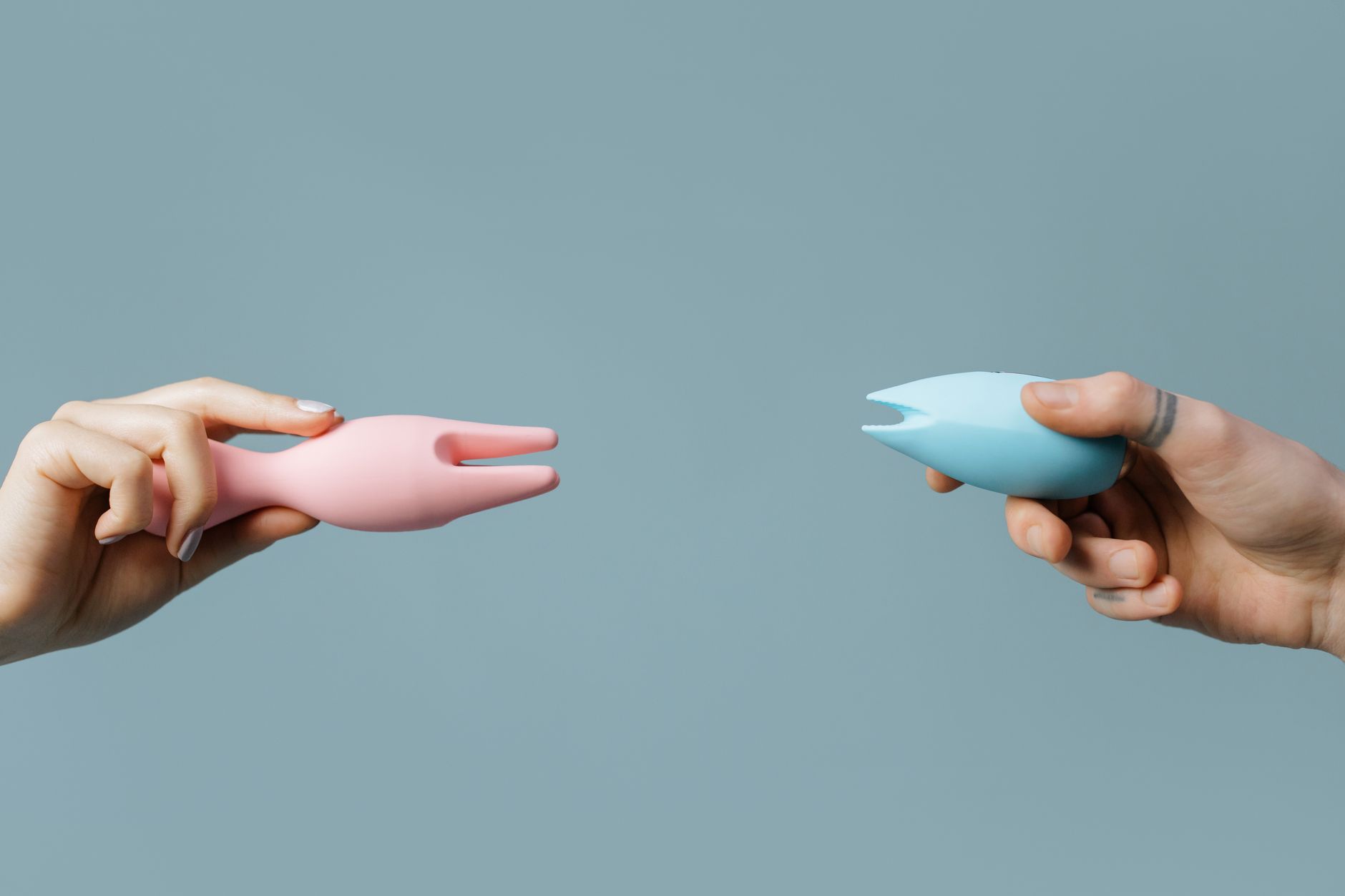
How to Use Lemon Vibrators When Recovery Slows After Childbirth
Your body isn't broken. Postpartum sensation changes, healing isn't linear, and pleasure can come back. Here's what the timeline actually looks like and how lemon clitoral vibrators help.
Your body made a human. Then it pushed that human out. Or someone cut through your abdomen to get them out. Either way, your nervous system is recalibrating, your hormones are doing somersaults, and the person you were before pregnancy is still in there somewhere, except now they're exhausted and leaking from multiple places. Adding pleasure to that picture feels impossible.
The vulva and vagina are packed with nerve endings. During pregnancy, those tissues swell. During birth, they stretch (sometimes tear). During recovery, they're inflamed, healing, and extremely sensitive to pressure in ways that don't feel good yet.
At the same time, your pelvic floor muscles—the ones that help with arousal, pleasure, and sensation—are either stretched out from vaginal delivery or traumatized by being cut during a C-section. Either way, they need time to regain tone and coordination. This isn't weakness. This is biology.
Hormones add another layer. Estrogen and testosterone both drop postpartum. If you're breastfeeding, prolactin spikes, which actively suppresses arousal hormones. Your body is literally designed to prioritize milk production over pleasure right now. That's not a failure. That's your nervous system doing its job.
The timeline varies wildly. Some people feel ready at six weeks. Others need six months. Some don't feel like themselves until they stop breastfeeding. All of that is normal.
Tissue sensitivity. The vulva is healing. Direct pressure feels overwhelming, almost painful. That doesn't mean you're broken. It means direct touch is too intense. Suction-based stimulation—like what The Lemon Sexual Toys offers with clitoral vibrators—bypasses harsh friction and stimulates nerves through gentler pressure instead. Your tissues don't have to bear as much mechanical stress.
Disconnection from your body. Pregnancy, delivery, and early parenthood can create a weird distance between you and your own skin. You've been touched constantly—by your partner, your baby, your OB, nurses—in ways you didn't choose. Rebuilding agency over your own pleasure takes time. Using a lemon vibrator alone, at your own pace, with zero pressure from a partner, is often the first step back to that ownership.
Fatigue as a pleasure killer. You're not sleeping. You're bleeding, healing, and your nervous system is in survival mode. Desire doesn't show up when your body thinks it's in crisis. That's not a relationship problem. That's your body being smart.
Wait at least six weeks. This isn't arbitrary. Lochia—the postpartum bleeding—usually stops by then, and risk of infection drops significantly. If you tore or had an episiotomy, ask your OB at your six-week checkup. If you had a C-section, same thing. Don't guess.
At six weeks, you can start exploring with a lemon vibrator solo. Not with a partner yet. Not as foreplay. Just you, alone, no agenda, seeing what your body can feel.
Start with the lowest setting. The Lemon Sexual Toys clitoral vibrators have intuitive controls precisely because postpartum bodies need to go slow. Begin at pattern one or two. Don't try to rush to orgasm. The goal isn't pleasure yet. The goal is reconnection and gentle stimulation of nerve pathways that have been dormant.
Sessions should be short. Five to ten minutes. You're not trying to finish. You're testing the waters. Pay attention to what actually feels good versus what feels like you're supposed to want it. That's the conversation with yourself that matters right now.
Why suction-based vibrators specifically? Because they work with your healing tissue, not against it.
Traditional vibrators move in one direction: up and down, side to side. They require direct contact with sensitive tissue. During early postpartum recovery, that friction can feel painful or irritating, even on low settings.
Suction vibrators, like The Lemon Sexual Toys' clitoral vibrators, create gentle pressure waves that stimulate the clitoral nerve network without requiring sustained friction. It's a fundamentally different sensation. Many people describe it as less intense and more approachable during recovery.
The other advantage: your hands don't have to hold anything in place. You can adjust angle, pressure, and positioning with minimal effort. Early recovery is exhausting. You don't need a toy that demands precision or strength.
Your partner might be waiting. They might be patient. They might also be anxious, rejected, or confused. None of those feelings are wrong. But pleasure is not the place to work through that.
Here's what helps: separate the conversation. "I'm not ready for partnered intimacy yet" is different from "I don't want you." One is about timeline and recovery. The other is about relationship security. Confusing them guarantees both conversations go nowhere.
Tell your partner specifically what you need: time alone to reconnect with your own body, no pressure for partnered sex, and patience. Set an actual timeline if you can. "I'm going to spend two weeks using a lemon vibrator alone, then we can talk about what comes next." Specific beats vague.
When you do start partnered play, start slow. Foreplay focused on non-genital touch first. Your partner can watch you use a lemon vibrator—that's often easier than direct partnered touch and can be genuinely intimate. Move to partner involvement only when you've already rebuilt some sensation solo.
If pain is sharp or burning during or after stimulation, stop. Pain during recovery is sometimes normal, but excruciating pain isn't. See your OB.
If you're experiencing severe anxiety around touch or penetration, that might be postpartum trauma or postpartum depression manifesting. Neither is rare, and neither is your fault. Talk to a therapist who specializes in postpartum mental health.
If you have no interest in pleasure for six months or longer, and that's distressing to you, check in with your doctor. Hormones, sleep deprivation, and depression all suppress arousal. A healthcare provider can help you figure out which one is playing the biggest role.
If your pelvic floor still feels completely numb or non-functional at four months postpartum, ask for a pelvic floor physical therapy referral. You don't need this to "fix" pleasure, but pelvic floor PT is genuinely restorative and accelerates recovery across the board.
Maybe you'll come back to partnered sex. Maybe you'll prefer solo exploration with a lemon vibrator for longer than you expected. Maybe your sexuality shifts entirely. All of that is postpartum. All of that is okay.
Most people find that sensation returns gradually. By three months postpartum, many notice that lower-intensity stimulation actually feels good again, not just tolerable. By six months, if everything else is stable, arousal starts to rebuild.
But linear recovery is a myth. You'll have weeks that feel great and weeks that feel like month one all over again. Stress, sleep deprivation, hormonal fluctuations—they all swing your capacity. A lemon vibrator is useful during all of those phases because you can adjust intensity instantly and stop whenever you want.
Your body didn't fail you. It did one of the hardest things a body can do. Recovery takes time, and pleasure comes back when your system feels safe enough to prioritize it again. That's not a problem to solve. That's exactly how it's supposed to work.
Completely normal. The combination of swelling, inflammation, hormonal shifts, and nerve sensitivity creates a kind of numbness that can last six to twelve weeks. Some of it is physical—swollen tissue is less responsive. Some of it is neurological—your nervous system is in recovery mode. This isn't permanent, and it doesn't mean anything broke.
Wait until at least six weeks postpartum and get clearance from your OB. By six weeks, lochia usually stops and initial healing is underway. Start with the absolute lowest setting on a lemon clitoral vibrator and keep sessions brief. If you had significant tearing or an episiotomy, ask your doctor specifically about vibrator use. They'll tell you if you need to wait longer.
Yes, but the timeline is the same—wait six weeks and ask your OB. C-section recovery affects your pelvic floor differently than vaginal delivery does. The surgery itself doesn't damage the vagina or vulva, but your whole nervous system is in healing mode. Start conservatively with a clitoral vibrator, avoid any pressure near the incision, and listen to your body's signals carefully.
Many reasons, and none of them necessarily reflect the quality of your relationship. They might be anxious about connection. They might feel rejected. They might not understand that recovery is biological, not emotional. The fix isn't to go along with it. The fix is a direct conversation: "This is what my body needs right now. Here's when I think I'll be ready. This isn't about you." Often that context alone transforms the dynamic.
Maybe. Maybe not. Your body changed. Your priorities changed. Your nervous system changed. Some people say they orgasm more easily after childbirth. Some say pleasure feels different but good. Some say it takes years to feel "normal" again. There's no standard recovery template. The goal isn't to recreate what was. The goal is to discover what works for your body right now.
They can be part of a gradual reconnection, but they're not a fix for zero libido. Prolactin literally suppresses arousal hormones. That's not a problem to overcome. It's your body protecting your resources. Some people don't feel libido return until they wean. Others find that brief solo exploration with a gentle lemon clitoral vibrator, even without arousal, keeps that part of their identity alive during the drought. Either choice is fine. Give yourself permission to not want sex while breastfeeding. Forcing it rarely helps.