
The orgasm that never comes when you're watching the clock
Let's be real. You're in bed. There's this expectation. Maybe it's from a partner. Maybe it's from yourself. And suddenly what was supposed to feel good feels like a performance where you're failing in real time. Your body tenses. Your mind spirals. And the faster you chase the orgasm, the faster it runs away.
This is one of the most common blocks I see in my practice, and it's not actually about your body's capacity. It's about the pressure itself becoming the enemy.
Why pressure kills pleasure (the neurobiology)
When you feel rushed or judged, your nervous system shifts into a state called sympathetic activation. This is fight-or-flight mode. Your blood vessels constrict slightly. Your pelvic floor tightens involuntarily. Blood flow that should be flooding your clitoris gets redirected. Hormones that support arousal (oxytocin, dopamine) drop. You're literally fighting your own physiology.
Add a ticking clock or the awareness that a partner is waiting, and you've created the perfect conditions for the opposite of pleasure. Your body knows it's not safe to relax. So it doesn't.
This isn't a character flaw. It's a survival mechanism misfiring in a low-stakes situation.
The pressure problem gets worse with standard vibrators
Many people reach for whatever vibrator is nearby, turn it to maximum intensity, and white-knuckle their way through it. This approach actually reinforces the pressure dynamic. You're using brute force to chase the sensation, treating your body like a machine that needs to be forced into production.
Then when it doesn't work, the shame arrives. "What's wrong with me? Why can't I just come?" Nothing is wrong. You're just fighting your nervous system while running out of time.
Lemon clitoral vibrators shift this dynamic because of how they're engineered. The suction technology on lemon vibrators creates a sensation that's rhythmic, building, and almost impossible to ignore. It's not about raw intensity. It's about the quality of the stimulation, which means you don't need to be forcing anything.
How lemon vibrators help you reclaim the pacing
They're designed for sensation depth, not speed. The Lemon clitoral vibrator uses air-suction patterns rather than traditional vibration. This means the stimulation builds gradually, naturally pacing you. You're not chasing anything. The pattern is carrying you.
You can start low and stay there. Set it to one of the lower patterns (usually 1 or 2) and just stay with that sensation for five, ten, fifteen minutes. Your nervous system doesn't need to sprint. It needs permission to wander. The Lemon vibrator's design means you get rich sensation at lower intensities, so you're not white-knuckling to feel anything.
The rhythm is external, not internally driven. When you're under pressure, your brain tries to force the outcome. Using a rhythmic tool like a lemon vibrator means the pattern is coming from outside you. Your job shifts from "make this happen" to "follow this sensation." That subtle reframe is enormous.
The actual protocol when you're under pressure
First. Set a boundary about time. Not with a partner, with yourself. You need 20 minutes minimum. Not to come. To explore. If you're under pressure to finish in five, you've already lost the game.
Second. Start with lower patterns. With lemon sexual toys, this means patterns 1 or 2. Spend five full minutes just feeling it. Don't chase sensation. Don't think about outcome. Your only job is to notice what you're experiencing: temperature, texture, the rhythm, where you feel it most intensely.
Third. Breathe deliberately. When we're under pressure, breathing gets shallow. Consciously breathe into your belly. Slower exhalation than inhalation (four counts in, six counts out). This signals your nervous system that you're safe.
Fourth. If intensity builds, great. If it doesn't, that's also fine. The goal isn't an orgasm in this phase. The goal is your nervous system genuinely believing you have time.
Once your body feels safe (and this might take ten minutes or thirty), pleasure arrives differently. Less frantic. More embodied.
What to do if you're using a lemon vibrator with a partner
This is where the dynamic gets important. If your partner is present and you're feeling watched, that gaze can itself be pressure. Have the conversation beforehand.
You might say: "I want to explore this together, but I need us both to remove the expectation of a specific outcome. My pleasure might look like coming. It might look like twenty minutes of sensation. Both are a success."
Then actually mean it. If your partner can't genuinely let go of the outcome, that's a separate conversation about what they need. But if they can, having them present while you explore with a lemon clitoral vibrator can be surprisingly intimate. They're witnessing your pleasure, not performing it.
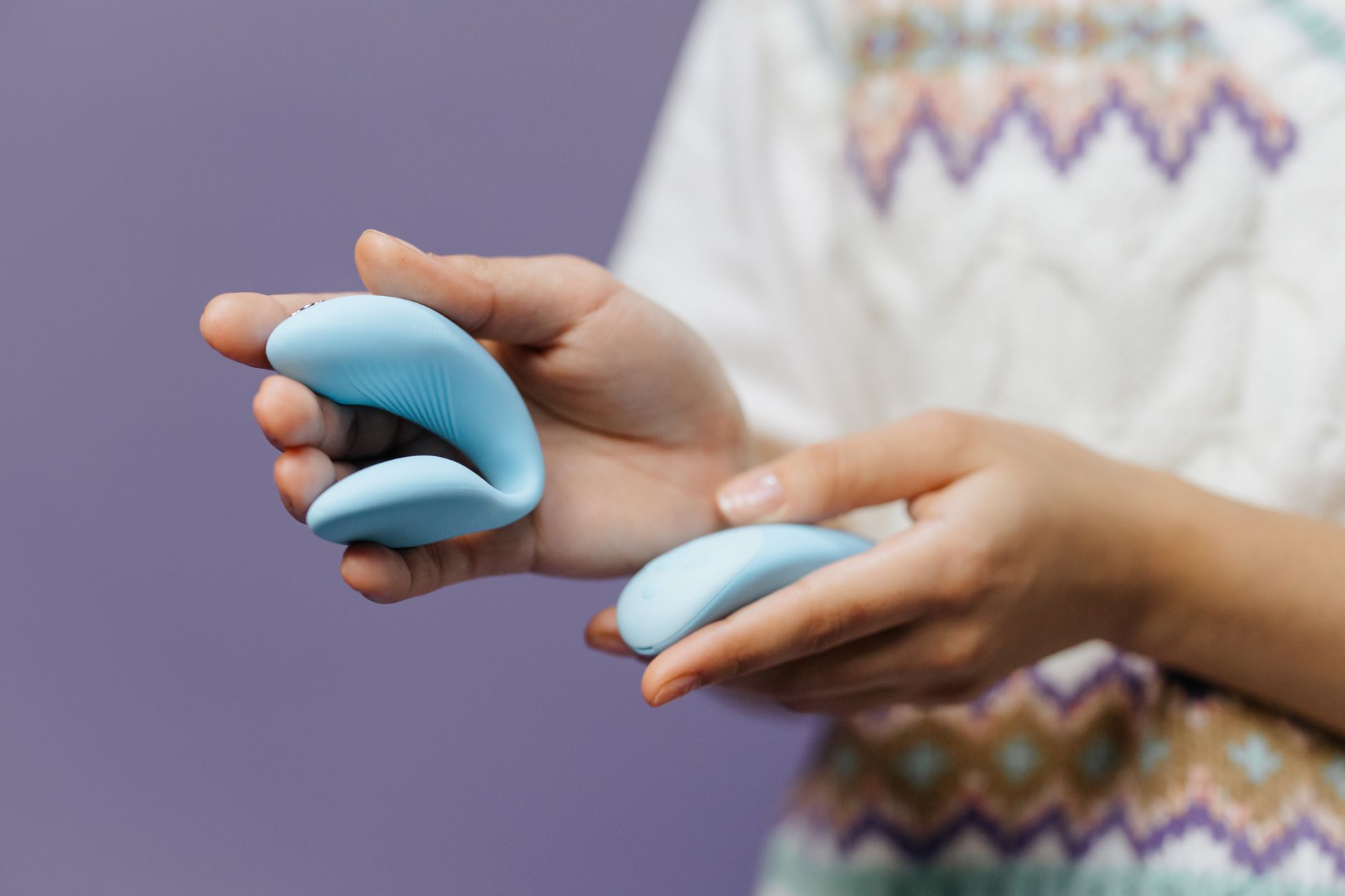
Photo by cottonbro studio on Pexels
The shame spiral is a real thing
If you've spent years or decades not being able to come quickly (or at all), there's usually shame attached. Your brain has probably constructed a narrative: "I'm broken," or "I take too long," or "There's something wrong with my body." That story is playing in the background during sex, which is another layer of pressure.
Lemon vibrators can't fix a story your brain has been telling for years. But they can start to interrupt it. When you use a tool that actually creates sensation that feels good without forcing, without performing, without rushing, something shifts. You start to experience evidence that your body isn't broken. It was just responding logically to an impossible situation.
When to add intensity (and when to stay low)
This is where most people mess up the protocol. They assume once they feel something, they should crank it up. Don't.
Stay at your comfortable intensity until your body naturally wants more. You'll feel a shift. It's not a decision. Your hips might start moving differently. Your breathing might change. Your focus gets more concentrated. Those are signals that your nervous system is ready for the next level.
This might happen at pattern 2. It might happen at pattern 4. It might never happen, and that's completely fine.
When you do shift intensity, shift one level at a time. Stay there for at least two minutes. Let that new sensation become familiar before you go higher. You're building arousal, not racing toward a finish line.
The paradox is real
The less you chase the orgasm, the more likely it becomes. This isn't mystical. It's just that your nervous system can finally do its job when it's not being sabotaged by pressure and fear.
Using a lemon vibrator intentionally removes the need to chase. The tool is doing the work. You're just receiving. And receiving, when you finally give yourself permission to do it fully, is when pleasure happens.
Frequently asked questions
How long should I realistically plan for if I feel rushed?
Start with 25 minutes. That's enough time for your nervous system to genuinely shift gears. If you orgasm in ten, wonderful. But if you give yourself 25 minutes of uninterrupted time with no expectation of outcome, your body stops fighting you.
Is it normal that I feel more pressure when a partner is watching?
Completely normal. It's evolutionary. The presence of another person activates a social anxiety layer. The conversation matters here. You might ask your partner to be in the room but not watching directly, or to be actively engaged (kissing you, touching you elsewhere) so it feels like co-creation instead of observation.
What if I still can't orgasm even with lemon vibrators and all this time?
Then you might have something deeper happening. Sometimes pressure-induced blocks are connected to past experiences, body image, or relationship dynamics that need professional support. A therapist who specializes in sexual health can help you untangle what's really going on. But nine times out of ten, removing actual time pressure and using a tool that doesn't require forcing is enough to shift things.
Can I use this protocol with other toys or just lemon vibrators?
Lemon clitoral vibrators are particularly good for this because of their suction design, which naturally paces arousal. But the core principle (starting low, staying with sensation, removing time pressure) works with any toy. Just make sure you're using something that feels good at low intensities, not something that needs maximum power to register.
What if the pressure is coming from inside me, not from a partner?
That's actually the most important version of this work. You've internalized the expectation. The practice is the same, but with a mental shift. Before you start, explicitly tell yourself: "I don't know if I'll come today. That's completely fine. My only goal is twenty minutes of pleasure, whatever that looks like." Repeat it. Mean it. Your nervous system is listening.
Does this work if I've never had an orgasm?
Yes. It actually works better because you're not chasing a memory of something specific. You're just exploring sensation without a mental target. The pressure around "achieving" orgasm is often what prevents it. Taking that off the table creates space for your body to figure out what feels good. And sometimes, when the pressure is truly gone, orgasm arrives as a surprise.
The real shift
The Lemon clitoral vibrator isn't magic. But it does something specific: it removes the need for you to force your way to pleasure. The tool does the pacing. Your job is to breathe, stay present, and let your body have time to actually respond.
If you've been operating under pressure for a long time, that shift might feel weird. You might even feel guilty for taking thirty minutes when you "should" be done in five. That guilt is the old rule talking. Let it talk while you keep exploring.
Your pleasure doesn't owe anyone speed. And a tool designed for depth, not velocity, is exactly what interrupts that pattern.
When you're ready to explore this without pressure, reach out. We're here to help you rebuild trust in your own body.