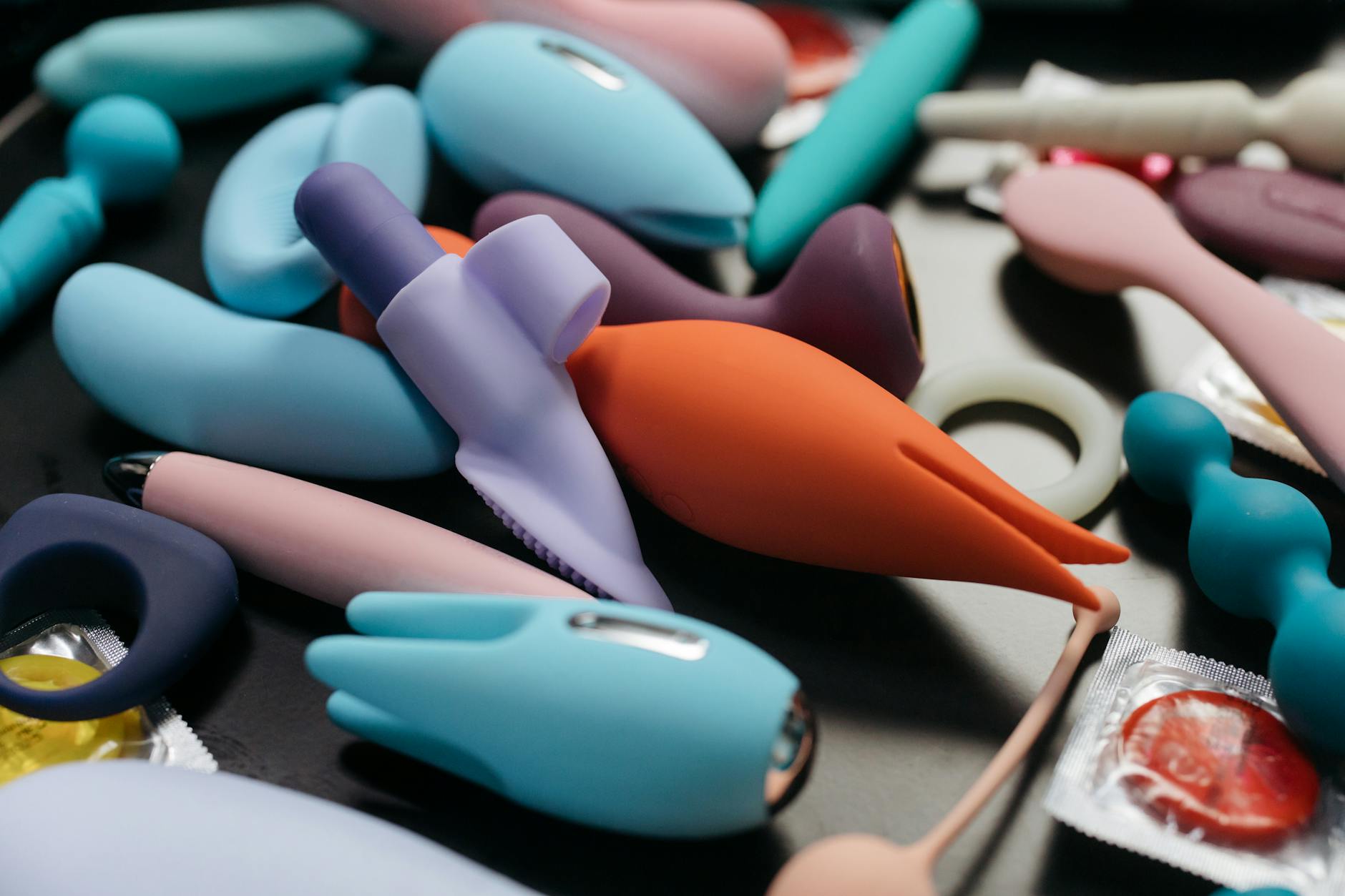
How to Use Lemon Vibrators When You Feel Self-Conscious About Pleasure
Self-consciousness doesn't mean your body is broken. It means your nervous system learned to protect you. Here's how to rewire that signal with lemon clitoral vibrators and reclaim what's yours.
Self-consciousness during pleasure isn't modesty. It's a nervous system doing exactly what it was trained to do. If you grew up hearing that wanting too much was greedy, that enjoying your body was wrong, or that pleasure was something that happened to you rather than something you orchestrated, your brain learned to throw a brake pedal on the experience.
The signal lands in real, physical ways. Your chest tightens. Your mind narrates what you're "supposed" to feel. You become a spectator in your own body instead of a participant. And then the shame kicks in because you're thinking about your self-consciousness instead of the sensation itself.
This is wildly common. I've worked with hundreds of people who describe the same thing. The good news is that self-consciousness during pleasure is treatable. It doesn't require years of therapy. It requires permission, practice, and sometimes a tool that makes reclaiming your body less abstract.
Your nervous system has two core jobs. Stay alive and stay safe. If the people around you growing up sent the message that pleasure was unsafe (morally dangerous, socially risky, a sign you were "too much"), your brain encoded pleasure as a threat.
Now when you try to feel good, your nervous system activates what's called the sympathetic brake. Your muscles tense. Blood flow redirects away from the clitoris and toward your limbs. Your brain prioritizes scanning for danger instead of processing sensation. You become hyper-aware of your own body from the outside perspective. This is self-consciousness, and it's a protection mechanism.
The thing about protection mechanisms is they don't turn off because you logically know you're safe now. They turn off when you practice new experiences that feel safe enough to process slowly.
Arousal requires what neuroscientists call "cognitive bandwidth." Your brain has to be free to notice sensation, build intensity, and move toward response. When self-consciousness is active, you're using that bandwidth to monitor yourself.
Research on gendered pleasure shows that people who grew up with messages about their bodies being "too much" or needing to be hidden tend to have lower orgasm rates, higher rates of faking, and more difficulty experiencing sensation at all. The mechanism is simple. Awareness of being watched, even if that watcher is yourself, suppresses the very neural pathways you need for pleasure.
This is why solo exploration is so valuable. It removes the social mirror. The person you're most self-conscious around is often yourself. Working alone to build sensation tolerance is the foundation.
Here's where lemon clitoral vibrators enter the picture. The suction mechanism used in devices like the Lem works differently than traditional vibration. It stimulates a wider nerve cluster without requiring direct friction, which means it can work for people whose nervous systems are still in a protective state.
Why this matters for self-consciousness specifically: when your brain is used to suppressing sensation, you need a stimulus that's compelling enough to override the brake signal. Clitoral vibrators and lemon suckers create sensation patterns that your brain can't easily ignore or intellectualize away. You literally can't think about whether you're doing it right when the stimulus is that engaging.
It's not magic. It's just smart neurology. The device does the heavy lifting while your brain learns that pleasure is safe.
If self-consciousness has been your baseline, jumping straight to intensity isn't the move. Here's what I recommend.
Stage one: Solo, low pressure. Use your lemon vibrator alone, with no performance expectation. Set a timer for 10 minutes if that helps. The goal isn't orgasm. It's sensation. Start on the lowest pattern. Notice what happens in your body without judgment. If your mind starts commenting ("This isn't working" or "I'm not doing this right"), notice that thought and return to the physical sensation.
Stage two: Extend the timeline. Once you've done stage one a few times, bump it to 15 or 20 minutes. Longer stimulation gives your nervous system time to downshift out of protection mode. It's boring and safe and necessary.
Stage three: Add fantasy or external stimulus. Some people find it easier to drop self-consciousness with something else occupying the critical part of their brain. That might be written erotica, audio, or a specific fantasy. This isn't a distraction. It's a bridge away from self-monitoring.
Stage four: Integrate with a partner (if applicable). If you have a partner, the next step is building comfort with them present. This doesn't mean partnered sex. It might mean they're in the room reading while you use your clitoral vibrator. That small shift "I'm allowed to pleasure myself while you're here" is huge for nervous systems that learned pleasure must be hidden.
Don't shame yourself for the self-consciousness. Your body isn't broken. It's doing its job.
Don't force intensity. If the Lem feels too strong, use a lower pattern. There's no badge for toughing it out. Gentler intensity that you can actually feel is better than maximum power that triggers your freeze response.
Don't perform recovery. Some people try to "get over" self-consciousness by white-knuckling into pleasure. That's just shame wearing a different costume. The work is gentler. It's patient. It's allowing your nervous system to learn over time that this is safe.
Don't compare your timeline to anyone else's. Self-consciousness varies wildly based on your specific history. Some people shift in weeks. Others take months. Both are normal.
Before you use your lemon vibrator, your nervous system needs to be relatively calm. This means scrolling for 20 minutes beforehand isn't ideal. Your nervous system is activated from the stimulation.
Try this instead. Light movement like stretching. A warm bath. Something grounding like holding ice or a weighted blanket. Deep breathing where your exhale is longer than your inhale (this signals safety to your vagus nerve). Then, once you feel genuinely relaxed, begin.
This isn't indulgent. It's the necessary setup. You're essentially telling your nervous system "we're safe now" before asking it to drop the self-protective barrier.
Self-consciousness rooted in messaging about your body usually improves around week three or four of consistent solo practice. Not overnight. Weeks. Your brain is learning a new pattern, and that requires repetition.
You might notice the shift as subtle. Your mind narrates less. The sensation feels more immediate. You forget to monitor yourself for longer stretches. These are signs the protective signal is loosening.
Some people notice it as a sudden opening. One time it just clicks. That's also normal. There's no single trajectory.
If you're navigating this with a partner, communication is everything. Most partners don't know that self-consciousness isn't about them. They might think you're not attracted to them or don't trust them, when actually you don't trust your own permission to feel.
Here's what I tell couples. The sentence isn't "I have shame around pleasure." It's "My nervous system learned that pleasure wasn't safe, and I'm rewiring that. I need to practice solo first, and I want your support." That's specific. That's actionable. That doesn't implicate your partner.
There's something about using a quality clitoral vibrator that shifts how you think about your body. You're not trying to be sexy or perform arousal. You're conducting an experiment. You're learning something. That reframe alone helps some people drop the self-consciousness.
You're not broken. You're not too slow or too fast or too hard to please. You're someone whose nervous system learned a protective pattern and is now learning a new one. That's all this is.
If you're experiencing pleasure that feels inconsistent or unpredictable, self-consciousness often underlies some of that variability. Your nervous system is in a state of hypervigilance. The same stimulus feels different depending on how activated you are.
Addressing the self-consciousness first usually improves the consistency. You're not changing your body. You're changing your nervous system's baseline state.
For most people, yes. The critical voice becomes quieter and less intrusive. You stop monitoring yourself as closely. But old messages don't fully vanish. Most people find that in moments of stress or relationship change, a whisper of that old self-consciousness returns. You just recognize it faster now and know how to move through it.
Yes, actually. The advantage of starting with a tool is that you're not relying on your own brain to generate arousal from nothing. The device does the heavy lifting while you practice sensation. But I'd pair this with at least talking to someone about the shame. That doesn't have to be therapy. It could be a trusted friend or a sex coach. The work of permission happens in multiple places.
Nothing physical, or nothing emotionally? If it's physical, make sure you're genuinely relaxed first. Your nervous system might still be in protection mode. If it's emotional (you're waiting to feel something and you don't), that's okay. Sometimes pleasure builds slowly. Sometimes you need a few sessions before your brain trusts it's safe.
You don't need to tell them anything. Your solo practice is yours. That said, if you want to eventually integrate them into this work, they'll eventually know something shifted. Some people find that giving a partner a heads-up ("I'm working through some stuff and it might help if you could just hold space for me") prevents them from misinterpreting changes. Others prefer to surprise them once they're further along. Either is valid.
Three to six months for noticeable shifts in most people I work with. That's consistent solo practice, ideally once or twice a week. Some people move faster. Some take longer. The pattern matters more than the speed.
Probably both. A quality clitoral vibrator is a tool. Rewriting nervous system patterns usually involves some combination of solo practice, partnered communication, and sometimes working with a therapist who understands somatic work. A vibrator removes one barrier. Nervous system rewiring addresses the root.
You're not too much. You're not broken. You're not asking for something unreasonable. You're asking for permission to feel good in your own body. That permission might not have been modeled for you. Your nervous system learned to protect you from something that felt dangerous.
Now you get to teach it that pleasure is safe. A lemon vibrator is just a tool that makes that practice less abstract. Your body already knows how to respond. Your nervous system just needs practice believing it's allowed to.
Start small. Practice solo. Build confidence gradually. Your timeline is the right timeline. If you need support beyond vibration and self-practice, reach out and let's talk about what that looks like.