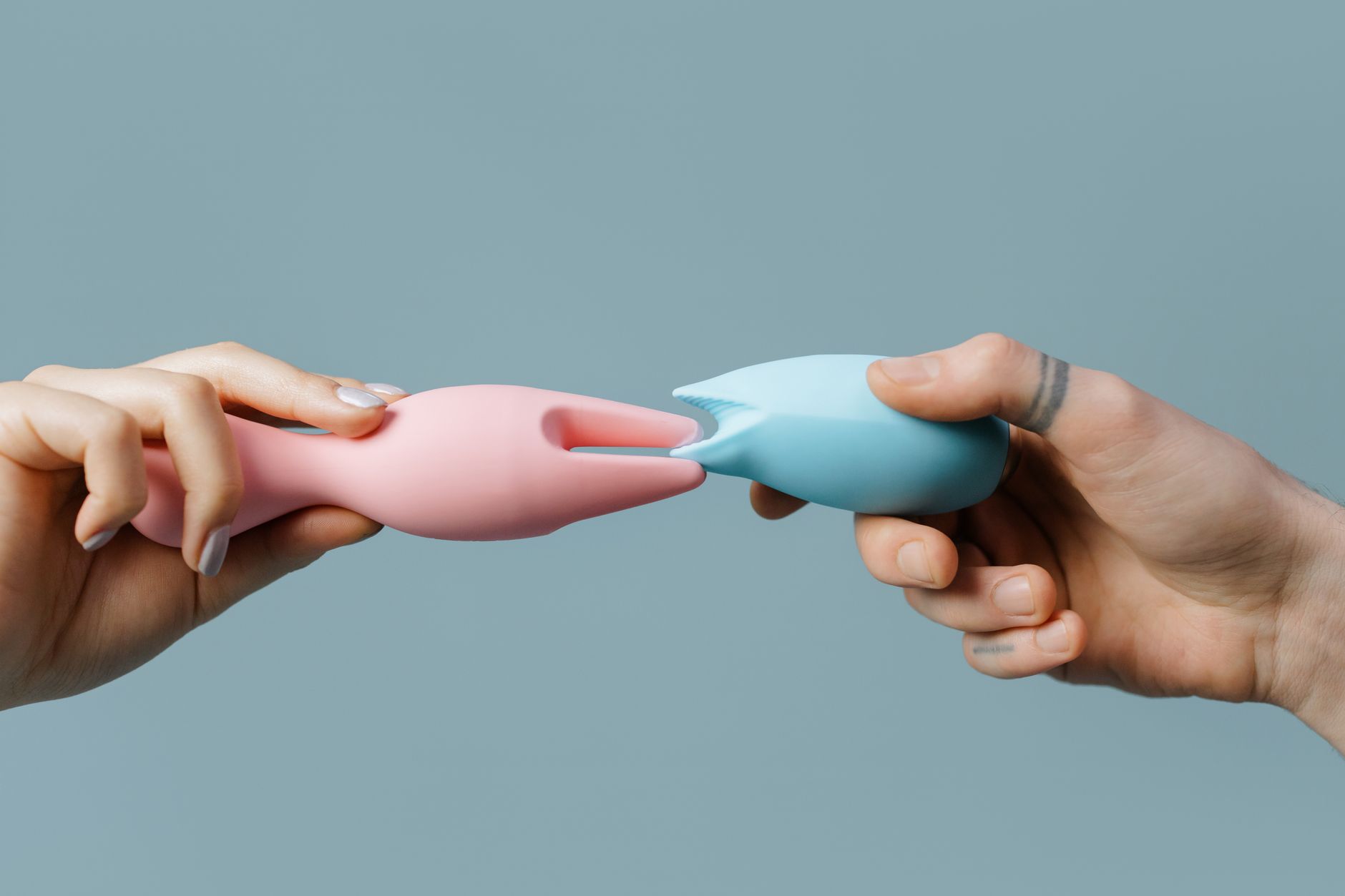
Let's talk about the timing problem
Here's the thing about introducing vibrators to a new partner: the earlier you do it, the less charged it feels. But that window is narrow, and it closes fast. Wait too long and suddenly you're bringing it up three months in, which can feel like a secret you've been keeping. But rush it and you haven't built enough foundation yet to have a real conversation about what it means.
I see this in my practice constantly. People with a history of relationship trauma or betrayal freeze when the moment comes to be honest about their sexuality. They assume introducing toys signals neediness, unfaithfulness, or that something's wrong with the partnership. None of that is true, but the anxiety is real.
Why new relationships make this harder
When you're rebuilding trust with someone new, you're already managing a bunch of invisible work. You're monitoring their reliability, tracking patterns, noticing whether they follow through on small promises. You're probably hyperaware of how much of yourself to reveal and when. Adding sexuality into that mix feels risky.
The paradox is this: hiding your pleasure needs is itself a trust breaker. It signals that you don't believe this person can handle who you actually are. So the longer you wait, the more weight it carries when you finally bring it up.
Research on couples therapy shows that sexual honesty in early relationships correlates strongly with long-term relationship stability. Not because the toys themselves matter, but because you've proven you can tell the truth about what you want.
The conversation framework that actually works
Don't lead with the toy. Lead with the truth.
Instead of "I have something I want to try in bed," try "I want to be honest about my sexuality with you. That matters to me in this relationship." This reframes the whole thing. You're not asking permission or pitching a product. You're stating a value.
Then, depending on their response, you can get specific. "I use vibrators solo, and I think they could be fun for us together. But I also want to know what you're comfortable with." Notice what's in that sentence: agency (you use them), normalcy (they're part of your life), and genuine curiosity (you actually want their input).
The biggest mistake people make is apologizing or over-explaining. "I know you might think this is weird, but..." or "This doesn't mean I'm not satisfied..." or "I read this article about how toys help relationships..." You're inviting them to doubt you. Stop.
If they have a negative reaction, stay calm. "I hear that this surprised you. I'd like to talk about what's coming up for you." Then listen. Their reaction often has nothing to do with you and everything to do with their own history, insecurities, or misconceptions about what toys mean in a relationship.
Addressing the trust-specific anxiety
If you're rebuilding trust because of past infidelity, betrayal, or a previous relationship ending badly, this conversation is even more fraught. You might feel like introducing toys is risky, like it's giving the other person reason to doubt your commitment.
But consider the inverse: if you hide part of your sexual self because you're afraid, you're eroding the very trust you're trying to build. Real trust isn't about performing perfection. It's about being fully seen.
A vibrator isn't a substitute for your partner. It's a tool that can enhance pleasure alone or together. When you introduce it honestly, you're actually demonstrating that you're secure enough in the relationship to be vulnerable. That's trust building, not undermining.
How to introduce it physically
Once you've had the conversation and there's a yes, don't make it a production. Bring it out the same way you'd bring out any object you both want to explore. Casual, matter-of-fact, no ceremony.
Start with lower speeds if you're using something like the Lem vibrator. Let them see how it works, hear the sound it makes. Novelty anxiety fades fast when people can actually interact with the thing instead of imagining it.
If you're using it together, the focus should be on connection first, novelty second. Touch them while using it. Make eye contact. Let them hold it sometimes. The point isn't for the vibrator to replace intimacy. It's for it to become part of how you're intimate.
Solo use when you're in a new relationship
Here's what I want to emphasize: you don't need permission to use vibrators alone. You never did. But in a new relationship where trust is being rebuilt, being transparent about it changes everything.
"I use vibrators when I'm solo, and I also think we could have fun with one together" is a complete thought. You're not asking for approval. You're sharing information.
Some partners will want to participate. Others will need time to get comfortable with it. Some will need reassurance that solo pleasure doesn't diminish what you have together. All of those are fine conversations to have, as long as you're not treating your sexuality like it needs their permission.
When they're resistant
If your new partner continues to push back after you've had a genuine conversation, that's important information. Not necessarily a dealbreaker, but worth exploring.
Ask clarifying questions. "What specifically makes you uncomfortable?" "Do you think it means something about how I feel about you?" "What would need to be different for you to feel okay with this?"
Resistance often comes from one of three places: insecurity (they feel like they're not enough), misunderstanding (they think the toy is a substitute for them), or values mismatch (they genuinely have a different view of sexuality). Each one requires a different response.
Insecurity needs reassurance and inclusion. Misunderstanding needs education. Values mismatch needs an honest conversation about whether you're compatible long term. That last one is harder, but it's better to know early.
Building the case gently
If they're curious but hesitant, you can offer to show them information. Not articles about why they should be fine with it, but genuine resources about how vibrators work, what they do neurologically, how common they are in relationships.
You might also suggest using it together first, rather than solo, if that feels safer to them. Some partners feel more comfortable when they're part of the experience. That's a valid entry point.
What happens after
Once a vibrator becomes part of your sex life with a new partner, the novelty wears off quickly and it becomes just another thing you do. That's the goal. The emotional weight lifts.
What remains is the fact that you were honest about something vulnerable, they showed up for it, and you moved forward together. That's trust building at its most basic and most real.
If the relationship continues and deepens, you'll have other conversations about sexuality that matter. You'll probably try different things, find rhythms, discover what actually works for both of you versus what looked good in theory. All of that is easier once you've proven you can tell the truth about desire.
FAQ: Trust, toys, and new relationships
How soon is too soon to bring up vibrators in a new relationship?
There's no magic number, but aim for after you've established basic trust and safety. Usually that's 2-4 months in, but it depends on how much time you're spending together and how intimate things have gotten. If you're already having regular sex, you're not too early. If you haven't been intimate yet, wait. The conversation needs to happen in person, not over text, and ideally when you're both relaxed and clothed.
What if they say no? Should I use one anyway?
You can use one alone whenever you want. You always had that right. What matters is whether you're hiding it or being transparent about it. If they've said no to using one together and you hide solo use, you're eroding trust. If you're open about solo use and they've said no to partnered use, that's a boundary you're both agreeing to. There's a difference. The conversation matters more than the toy.
Does introducing toys mean the relationship isn't satisfying enough?
No. Sexual satisfaction and toy use aren't inversely related. Research actually shows that couples who incorporate toys report higher sexual satisfaction overall. Toys expand what's possible, not because something's missing, but because pleasure is expandable. That's a feature, not a bug.
Can vibrators help rebuild intimacy after betrayal?
They can be part of it, but they're not a magic fix. What matters is the conversation that precedes them. If you're using a vibrator to avoid talking about what happened, it won't help. If you're using it as part of actively rebuilding physical connection and trust, it can absolutely be useful. The honesty is doing the work, not the toy. As mentioned in how to reconnect with your partner using lemon vibrators after months apart, physical reconnection requires genuine vulnerability.
What if I'm worried they'll think I'm unfaithful for wanting to use toys?
That's often about their history, not your reality. If they've been cheated on before, a vibrator might trigger old fears. If they grew up with messaging that sex outside of specific parameters is shameful, a toy might feel transgressive to them. None of that is your job to fix alone. But you can help by being clear: "I want to explore pleasure with you. This is about us, not about someone else or something else." If they can't move past it with conversation and maybe some reading or therapy, that's worth knowing about a new partner early.
Should I hide my vibrator use if they're uncomfortable with it?
Not long term. Short term, while they're processing? Fine. You can say "Let me give you time to sit with this." But if months pass and you're still hiding it, you're not rebuilding trust. You're preventing it. Trust requires honesty, even about uncomfortable things, especially about uncomfortable things.
Here's the real thing
New relationships ask us to be brave in small ways before the big ways. Talking about vibrators is one of those small brave things. You're saying "here's part of me, here's what I want, I'm not apologizing for it, and I'm curious about you." That's the entire foundation of trust in a nutshell.
The Lemon sexual toys are designed to feel good and last. So is a relationship built on honesty. Both require showing up, being clear about what you want, and believing the other person can handle the truth. If you're rebuilding trust with a new partner, start there. Everything else flows from it.
Ready to have the conversation? You might also find it helpful to read about how to use lemon vibrators when your partner is skeptical about toys, which covers what comes after the initial yes.
Questioning whether this is the right relationship for you? Contact us if you want to talk through your specific situation.